Bacchus - the god of wine.
Ceres - the goddess of farming and the Earth.
Cupid - the god of love.
Diana - the goddess of the moon.
Fortuna - the goddess of luck.
Janus - the god of gates and doors.
Juno - the queen of the gods.
Jupiter - the king of the gods.
Mars - the god of war.
Mercury - the god of thieves, commerce and travelers.
Neptune - the god of the sea.
Pluto - god of the underworld.
Venus - goddess of love and beauty.
Vulcan - the god of fire, volcanoes and blacksmiths. Vulcan was seen as a blacksmith in the roman Belife
Sunday, December 26, 2010

How was Rome created? Read the following legend to learn how and who created Rome
The Story of the Founding of Rome (also known as the story of Romulus and Remus)
Romulus and Remus were twin brothers. Their father was Mars, the God of War, their mother was Rhea Silvia, a vestal virgin and daughter of the King, Numitor. Numitor's brother, Amulius, had taken the throne from him and had forced Rhea Silvia to become a vestal virgin so that she would not have any children who might try to take back the throne.
When the boys were born, Amulius seized them, put them into a basket and threw them into the river Tiber. He hoped that they would drown. However, the boys were rescued by a she-wolf who fed the babies with her own milk and cared for them.
They grew up and were found by the shepherd Faustulus, who took them home and looked after them until they were grown up.
The two young men discovered who they really were and decided to kill Amulius and Put their grandfather back on the throne. After doing this they decided to build a city of their own but could not agree where to build it. Remus favoured the Aventine Hill but Romulus wanted to use the Palatine Hill. They could not reach an agreement and so each began to build his own city enclosed with walls.
One day, Remus visited Romulus and made fun of his wall by jumping over it and saying how easily it could be breached. Romulus was so annoyed that he killed Remus and said the he would kill anyone who mocked his city or tried to break through the walls of Rome.
The legend says that Romulus became the first King of Rome in 753BC and populated his new city with runaway slaves and convicted criminals. He stole women from the Sabine tribe to provide wives for the slaves and criminals and to populate his new city.
The Sabine tribe were not happy about this and declared war on Rome. The war went on for many years but eventually the Sabine tribe and Romulus reached an agreement and the Sabines became a part of Rome under the Kingship of Romulus.
Romulus and Remus were twin brothers. Their father was Mars, the God of War, their mother was Rhea Silvia, a vestal virgin and daughter of the King, Numitor. Numitor's brother, Amulius, had taken the throne from him and had forced Rhea Silvia to become a vestal virgin so that she would not have any children who might try to take back the throne.
When the boys were born, Amulius seized them, put them into a basket and threw them into the river Tiber. He hoped that they would drown. However, the boys were rescued by a she-wolf who fed the babies with her own milk and cared for them.
They grew up and were found by the shepherd Faustulus, who took them home and looked after them until they were grown up.
The two young men discovered who they really were and decided to kill Amulius and Put their grandfather back on the throne. After doing this they decided to build a city of their own but could not agree where to build it. Remus favoured the Aventine Hill but Romulus wanted to use the Palatine Hill. They could not reach an agreement and so each began to build his own city enclosed with walls.
One day, Remus visited Romulus and made fun of his wall by jumping over it and saying how easily it could be breached. Romulus was so annoyed that he killed Remus and said the he would kill anyone who mocked his city or tried to break through the walls of Rome.
The legend says that Romulus became the first King of Rome in 753BC and populated his new city with runaway slaves and convicted criminals. He stole women from the Sabine tribe to provide wives for the slaves and criminals and to populate his new city.
The Sabine tribe were not happy about this and declared war on Rome. The war went on for many years but eventually the Sabine tribe and Romulus reached an agreement and the Sabines became a part of Rome under the Kingship of Romulus.
The Story of Persephone and Pluto
Persephone was the daughter of the goddess Ceres. One day Persephone was dancing with her friends in a sunny meadow, having a good time, picking flowers. Suddenly Persephone's uncle Pluto burst out of the ground and grabbed her and pulled her into his chariot! He took Persephone under the ground to his kingdom, the land of the dead,or the under world, and told her that he wanted her to be the Queen of the Underworld and marry him.
Persephone was very sad there under the ground. She wanted to go up into the sunshine again. But Pluto would not let her. Persephone was so sad that she would not eat nor drink. Meanwhile, back up in the land of the living, Persephone's mother Ceres was looking everywhere for her and could not find her. She cried and cried. Finally she went to her brother Jupiter, who was also Persephone's father, and asked him to help find Persephone. Jupiter, sitting way up there on top of Mount Olympus, was able to see where Persephone was. He told Pluto to give her back.
But Pluto said he would only give Persephone back if she had really not eaten or drunk anything from the land of the dead. Persephone had not eaten much, but it turned out she HAD eaten six pomegranate seeds. So they agreed that Persephone could spend six months a year above ground with her mother, but she would have to spend the other six months in the land of the dead with her uncle/husband. And that is how it has been since then, according to the story: that's why we have the seasons. When Persephone is above ground with her mother it is spring and summer because Ceres, her mother and also the god of weather, is happy. It is winter when Persephone has to leave Ceres and go live with Pluto.
Persephone was very sad there under the ground. She wanted to go up into the sunshine again. But Pluto would not let her. Persephone was so sad that she would not eat nor drink. Meanwhile, back up in the land of the living, Persephone's mother Ceres was looking everywhere for her and could not find her. She cried and cried. Finally she went to her brother Jupiter, who was also Persephone's father, and asked him to help find Persephone. Jupiter, sitting way up there on top of Mount Olympus, was able to see where Persephone was. He told Pluto to give her back.
But Pluto said he would only give Persephone back if she had really not eaten or drunk anything from the land of the dead. Persephone had not eaten much, but it turned out she HAD eaten six pomegranate seeds. So they agreed that Persephone could spend six months a year above ground with her mother, but she would have to spend the other six months in the land of the dead with her uncle/husband. And that is how it has been since then, according to the story: that's why we have the seasons. When Persephone is above ground with her mother it is spring and summer because Ceres, her mother and also the god of weather, is happy. It is winter when Persephone has to leave Ceres and go live with Pluto.
Roman Gods
The Romans used to worship multiple gods, each god you would pray to for a different reason.
The following posts are going to have a list of the Roman gods, and different storys about the gods.
The following posts are going to have a list of the Roman gods, and different storys about the gods.
Wednesday, December 22, 2010
What would a roman soldier wear?
Explaining everything that a roman soldier would wear is quite complicated. This is why I found this website
which will help you learn about everything they wore. Click on the word website to open up this fun, interactive game on dressing Roman Soldiers.
which will help you learn about everything they wore. Click on the word website to open up this fun, interactive game on dressing Roman Soldiers.
Types of Gladiators
Samnites: fought with huge rectangular shields, short swords, greaves, and visored helmets.
Thracians: These gladiators carried small round shields and curved swords.
Retiarii: A gladiator who fought with a trident, net, and dagger.
Secutores: Gladiators that had a shield, sword, and helmet with a visor.
Andabatae: Mounted gladiators who fought in armour on horses.
Essedarii: Gladiators that fought from chariots.
Thracians: These gladiators carried small round shields and curved swords.
Retiarii: A gladiator who fought with a trident, net, and dagger.
Secutores: Gladiators that had a shield, sword, and helmet with a visor.
Andabatae: Mounted gladiators who fought in armour on horses.
Essedarii: Gladiators that fought from chariots.
A Man in Ancient Romes Clothing
Like alot of other things in society, your clothes helped show how much power you had or what your status in the community was. Having said this you can understand how great rulers had different types of clothing then an innkeeper or a slave. The poor and shopkeepers, and slavs would always wear a tunic. A tunic was a one piece linen or wool vest that did not get in the way of ones work. The tunic of the average everyday roman citizen was just simply made of plain wool. Lighter fabrics were used to make tunics for the summer. Roman knights and senators had stripes of a purple cloth woven into their tunic, with one running from each shoulder. If one was wearing a crown you could tell that they had much power. A toga was worn only by men, and it was also worn on top of the tunic. The toga was also the national garment of ancient Rome. A romans hair was cleanly shaved, or short.
Below is the basic tunic:

This is the equestrian tunic:

And here is a senatorial tunic

Here is a picture of a toga:

On their feet, Roman men wore sandals like the ones pictured:

Below is the basic tunic:

This is the equestrian tunic:

And here is a senatorial tunic

Here is a picture of a toga:

On their feet, Roman men wore sandals like the ones pictured:

Hot Springs
As the Romans advanced towards England they found a hot spring. They never had seen one before and they thought it was like a gift from the gods. There was several hot springs near each other that they found. The largest one was worshipped by many people because it was the biggest of the hot springs, and they thought the hot springs were gifts from the gods. Many would throw their valuables into the springs to please the gods.The Romans created a plumbing system and so pipes would bring the hot water to the Baths that were built there. So at this bath they didn't need to make a heating sytem for the caldarium. Because the water was brought in from the "holy" hot springs, in these baths an altar was built so that priests could make animal sacrifices to the gods. The water from the hot springs also had a reputation to heal illnesses. This brought many from all over to drink the water thinking and hoping that it would cure their illness.
Roman Baths
The Roman baths involved several different temperature pools, excersising, eating, playing games, and much more. When you got to the baths you would first work out in a courtyard, this was so that you could become sweaty. You could also work out in the gymnasium, or in a swimming pool. Then you would enter the baths. Women and Men were never placed together in the Roman baths. First they would go into a pool filled with cold water. This was called the frigidarium. You can spend as much time as wanted in each pool, and if you wanted to eat you could go off into a seperate room, made for eating. There was also bathrooms. Your time in the pools if you were a women, would be spent gossiping.If you were a man your talk would be more about buisness and work life. After the frigidarium you would enter into a seperate room. This room would have a pool with lukewarm water. It was called the tepidarium. People would normally spend the whole day at the Baths. It was kind of like todays modern day spa's. It was a place where people go to relax. After the tepidarium you would go into a pool full with hot water called the caldarium. You may be wondering what they used to heat up the water in the caldarium. This was done by using a furnace and the hypocaust system carried the heat around the complex. Then after the caldarium you would go into a room like a sauna. Here a slave would rub sweet oil all over you. Then they would scrape it off with a tool called a strigil. A strigil was like a curved knife, without any sharp parts. The oil would help take, and get rid of the sweat and dirt from your body. That was the end of the Roman Bath experience. The Roman Baths were part of the Roman Culture. It wasn't very expensive to get into the Roman Baths, so everyone was able to go, except for some slaves. Many people loved the Roman Baths and thought it was a wonderful way to get clean and socialize. All though some didn't like it. In one mans diary he recorded how much he hates the baths, and why he hates it. His diary Entry is down below.
"I live over a public bath-house. Just imagine every kind of annoying noise! The sturdy gentleman does his exercise with lead weights; when he is working hard(or pretending to) I can hear him grunt; when he breathes out, I can hear him panting in high pitched tones. Or I might notice some lazy fellow, content with a cheap rub-down, and hear the blows of the hand slapping his shoulders. The sound varies, depending on whether the massager hits with a flat or hollow hand.
To all of this, you can add the arrest of the occasional pickpocket; there's also the racket made by the man who loves to hear his own voice in the bath or the chap who dives in with a lot of noise and splashing."
If he didn't live over the public bath house I think the man would have loved the baths. The problam is someone has to live over the Roman Baths, and it was him.
I hope you enjoyed this little essay about the Roman Baths.
"I live over a public bath-house. Just imagine every kind of annoying noise! The sturdy gentleman does his exercise with lead weights; when he is working hard(or pretending to) I can hear him grunt; when he breathes out, I can hear him panting in high pitched tones. Or I might notice some lazy fellow, content with a cheap rub-down, and hear the blows of the hand slapping his shoulders. The sound varies, depending on whether the massager hits with a flat or hollow hand.
To all of this, you can add the arrest of the occasional pickpocket; there's also the racket made by the man who loves to hear his own voice in the bath or the chap who dives in with a lot of noise and splashing."
If he didn't live over the public bath house I think the man would have loved the baths. The problam is someone has to live over the Roman Baths, and it was him.
I hope you enjoyed this little essay about the Roman Baths.
Monday, December 13, 2010
Roman Children
I found this really good BBC website about Rome, and what it was like for children, and what kind of education they had.
SO here it is:
http://www.bbc.co.uk/schools/primaryhistory/romans/family_and_children/
SO here it is:
http://www.bbc.co.uk/schools/primaryhistory/romans/family_and_children/
The Roman Mile
The word "mile" comes from the Roman milia, "thousands". The Romans measured distances in paces, which were about five feet. So, milia passum, 1,000 paces or about 5,000 feet, was the length of a mile.
I just found this accurate deifiniton of the Roman mile. I always knew that it was a 1,000 paces, yet I didn't know how much was their pace? I was overjoyed when I finally found this description of a Roman mile.
I just found this accurate deifiniton of the Roman mile. I always knew that it was a 1,000 paces, yet I didn't know how much was their pace? I was overjoyed when I finally found this description of a Roman mile.
Nero.....
Roman Emperor Nero's last words were "Qualis artifex pereo"—roughly, "What an artist dies in me"
This is very interesting, because many know, and if you haven't heard you are finding out now, that he was a bit crazy. He also peed on some statues in public. Yeah. From this example you can see he was not the best ruler, and frequently got drunk. Do you agree or think that Nero was an "Artist"? Tell me in the comments below.
This is very interesting, because many know, and if you haven't heard you are finding out now, that he was a bit crazy. He also peed on some statues in public. Yeah. From this example you can see he was not the best ruler, and frequently got drunk. Do you agree or think that Nero was an "Artist"? Tell me in the comments below.
Fun Fact
To celebrate his victory over Pompey, Julius Caesar gave a banquet at which 150,000 guests were seated at 22,000 tables. It lasted for 2 days. He also proclaimed a rent-free year for every poor family in the Empire. Wow thats alot of people, alot of food, and alot of money!

Roman Army Essay-Essay I wrote for school
Humanities Research over Break
Only men were allowed into the roman army. No women were allowed for they thought that they were unable to defend their country, and weren't strong enough. Each Roman soldier was a Roman citizen. If you were in the Roman army, you also had to be at least 20 years old, and you couldn't get married while you were a soldier. But that is the Roman Army. The Roman Empire was just like that only the soldiers where also from country's outside of Italy. These country's included Africa, Gaul, Germany, the Balkans, Spain and the Middle East. , and many more. Each time the Empire took over a city, they would take the 20 year and older men to help them fight in the army.
A Roman legion was an infantry unit consisting of heavily armed soldiers, equipped with shields, armor, helmets, spears and swords. There were about 30 legions in the roman army. In the beginning of the Roman empire each legion only contained about 3,000 armed men. The number soon went up to 4,800 when Julius Caesar reigned. The number got larger when Augustus ruled, going up to a little more then 5,000 soldiers. In one legion there was 10 cohorts. A cohort is made up of about 6 troops, of about 80 legionaries. These were called centuries. Each century, was led by a centurian. They were very, important. You were to obey him and do whatever he said for you to do. The general that commanded the whole entire legian was called a legate. The legion was like the backbone of the roman. It was a hard core, army group. Because they were the best of the army they got paid much higher then any of the other soldiers.
But there was not only legions, there was also other types of soldiers. An auxiliary was not s roman citizen, and was paid, a third of what the legionaries earned. These soldiers would normally guard forts, and sometimes, be on the front line. Artillery soldiers, where the ones in charge of the catapults. So they would be launching big balls of burning tar into the air.
The roman army used lots of different types of weapons. Archaeologist have figured out the armor and weapons the used by the Romans, by looking at Roman pictures and finding some armor. Armor was usually was made of some leather and iron. To protect their heads they would were a metal helmet. They obviously planned out the shields. The were rectangular, but curved so you could protect your body. The average soldiers weapons included a short knife, and a javelin. The short knife was mainly used for stabbing the opponent. A javelin is like a long spear. At the end there is a iron point. This way when they threw the javelin, it would not only hit the man, but stick into them. If they threw the javelin into a shield, most times they people they were fighting against would have to throw away the shield. This was because the javelin was very hard to get out of the shield. And if the javelin was thrown very forcefully it could even make a crack in the shield.
There was also some soldiers who had special talents. These talents were some like shooting bows and arrows, used sling shots, and some even swam. This way the group that could swim could swim and sneak up onto the enemy. This is compared to commandos today.
You must be wondering how the Romans got fit, or trained for fighting against the enemy. They would march for 20 miles each day, dressed up in all their armor. The would cross rivers in boats, swim and beat down forts. As they practiced, and even in the real deal each man held all of there things. This usually included the soldiers weapons and shields, food, spare clothes, a cooking pot and a ax, which was mostly used to chop down trees.
The roman army had some very excelled planning for formations. They would normally stand in a line and fight the enemy. But if the enemy had a catapult, and they were being shot at from above, the would lift there shields above there heads to protect themselves. Sometimes the would all gather together into a square. The people on the sides held their shields normally, upright. The ones in the middle held up their shields to protect their heads. When the did this it made them look like a turtle. This is how the formation got the Latin name of testudo, which means turtle in Latin.
Only men were allowed into the roman army. No women were allowed for they thought that they were unable to defend their country, and weren't strong enough. Each Roman soldier was a Roman citizen. If you were in the Roman army, you also had to be at least 20 years old, and you couldn't get married while you were a soldier. But that is the Roman Army. The Roman Empire was just like that only the soldiers where also from country's outside of Italy. These country's included Africa, Gaul, Germany, the Balkans, Spain and the Middle East. , and many more. Each time the Empire took over a city, they would take the 20 year and older men to help them fight in the army.
A Roman legion was an infantry unit consisting of heavily armed soldiers, equipped with shields, armor, helmets, spears and swords. There were about 30 legions in the roman army. In the beginning of the Roman empire each legion only contained about 3,000 armed men. The number soon went up to 4,800 when Julius Caesar reigned. The number got larger when Augustus ruled, going up to a little more then 5,000 soldiers. In one legion there was 10 cohorts. A cohort is made up of about 6 troops, of about 80 legionaries. These were called centuries. Each century, was led by a centurian. They were very, important. You were to obey him and do whatever he said for you to do. The general that commanded the whole entire legian was called a legate. The legion was like the backbone of the roman. It was a hard core, army group. Because they were the best of the army they got paid much higher then any of the other soldiers.
But there was not only legions, there was also other types of soldiers. An auxiliary was not s roman citizen, and was paid, a third of what the legionaries earned. These soldiers would normally guard forts, and sometimes, be on the front line. Artillery soldiers, where the ones in charge of the catapults. So they would be launching big balls of burning tar into the air.
The roman army used lots of different types of weapons. Archaeologist have figured out the armor and weapons the used by the Romans, by looking at Roman pictures and finding some armor. Armor was usually was made of some leather and iron. To protect their heads they would were a metal helmet. They obviously planned out the shields. The were rectangular, but curved so you could protect your body. The average soldiers weapons included a short knife, and a javelin. The short knife was mainly used for stabbing the opponent. A javelin is like a long spear. At the end there is a iron point. This way when they threw the javelin, it would not only hit the man, but stick into them. If they threw the javelin into a shield, most times they people they were fighting against would have to throw away the shield. This was because the javelin was very hard to get out of the shield. And if the javelin was thrown very forcefully it could even make a crack in the shield.
There was also some soldiers who had special talents. These talents were some like shooting bows and arrows, used sling shots, and some even swam. This way the group that could swim could swim and sneak up onto the enemy. This is compared to commandos today.
You must be wondering how the Romans got fit, or trained for fighting against the enemy. They would march for 20 miles each day, dressed up in all their armor. The would cross rivers in boats, swim and beat down forts. As they practiced, and even in the real deal each man held all of there things. This usually included the soldiers weapons and shields, food, spare clothes, a cooking pot and a ax, which was mostly used to chop down trees.
The roman army had some very excelled planning for formations. They would normally stand in a line and fight the enemy. But if the enemy had a catapult, and they were being shot at from above, the would lift there shields above there heads to protect themselves. Sometimes the would all gather together into a square. The people on the sides held their shields normally, upright. The ones in the middle held up their shields to protect their heads. When the did this it made them look like a turtle. This is how the formation got the Latin name of testudo, which means turtle in Latin.
Roman Dental Care
The Other Day I was wondering what kind of Dental care did the Ancient Romans had. I found this website: http://doctormuramoto.com/home.jsp?c=Kid's+Stuff&wiz=0&page=Kid's+Stuff which included some information on the Roman Dental care. This will be placed below.
By 300 B.C. folks in Etruria (a part of what is now Italy) were making false teeth from hippo and whale bone and setting them into lovely gold settings that fit right into a toothless mouth. The Etruscans were the best dentists in the ancient world. When a person died, whatever decent, real teeth they had were extracted from their corpsesand fashioned into beautiful Etruscan dentures - a fun word for false teeth. Unfortunately, the dental skills of the Etruscans vanished along with their civilization .
First they would take a metal file and roughen up the surface of the tooth. They then brushed the tooth with a solution of corrosive nitric acid. Sure, the teeth were white for a while, but the acid ate away the enamel. When the protective enamel was gone, a mouthful of cavities soon followed. And there you were - toothless as a month old baby.
By the year 100 A.D. in ancient Rome, people were sticking little metal hunks of wrought iron that had been beaten into fang-like shapes into their jawbones to replace missing teeth. And you thought braces made you look like a metal mouth!
By 300 B.C. folks in Etruria (a part of what is now Italy) were making false teeth from hippo and whale bone and setting them into lovely gold settings that fit right into a toothless mouth. The Etruscans were the best dentists in the ancient world. When a person died, whatever decent, real teeth they had were extracted from their corpsesand fashioned into beautiful Etruscan dentures - a fun word for false teeth. Unfortunately, the dental skills of the Etruscans vanished along with their civilization .
First they would take a metal file and roughen up the surface of the tooth. They then brushed the tooth with a solution of corrosive nitric acid. Sure, the teeth were white for a while, but the acid ate away the enamel. When the protective enamel was gone, a mouthful of cavities soon followed. And there you were - toothless as a month old baby.
By the year 100 A.D. in ancient Rome, people were sticking little metal hunks of wrought iron that had been beaten into fang-like shapes into their jawbones to replace missing teeth. And you thought braces made you look like a metal mouth!
Beyond the Inhabited World by Anthony Thwaite
This author does a great gob by gathering all this information about Roman Britain, and puts it in one, pleasing to the eye, place. This is a factual book which includes information on how they lived, what kind of tools they used, their farms, roads, and even what they worshiped. He also includes a couple writings from that time in Roman Britain, showing what other people who were actually there, views on the way of living and such. It does include some pictures. Can be found in the ISP library. 

The Assassins of Rome by Caroline Lawrence
In this book a group of crime solving, Roman kids, are told of a new scheme that has been happening. A group of three murderers are planning to kill the emperor, and they will do anything just to make this goal happening. One of the friends finds out that one of the murderers is related to him! But he doesn't know that until he has traveled to Rome with him. After there friends disappearance to Rome, the other friends hurry along to Rome, to find their friend, and find out who is attempting to kill the Emperor. This is a fairly easy read.
Can be found in ISP library.
Can be found in ISP library.

The Rotten Romans by Terry Deary
This is a wonderful book for those who want to learn about everything your teachers don't tell you about the Roman Empire. This just includes interesting facts, that are so unique, they are practically unable to be categorized. There is also these little questionnaires in the beginning that you can give to your teacher, to see how much they really do know about the Roman Empire.
You can find this book in ISP's library. This is an easy read, which will make you keep wanting to go back for more fun facts.
You can find this book in ISP's library. This is an easy read, which will make you keep wanting to go back for more fun facts.

Monday, December 6, 2010
The Roman Fort by Peter Connolly
This book doesn't just talk about Roman forts, and how they were built as the title signifys, but it is about the Formations of the soldiers, and what they would do in one day. If you want to learn about formations of soldiers you should check out this book because it has large clear pictures of the formations, and the different groups of soldiers like a legion, and who ruled the legion, and what was a centurian. Thought it is a skinny book, it has many words crammed on to one page, and this might scare away the reader. But it is a very good book which is worth while reading.
The Romans: People of the Past
This is a very factual book which includes everything from how Rome was created to the government and how it was ruled, to fashion back then. This is an easy to read, book, that is still packed full of interesting, and factual information. I, personally, had a fun time reading this book and learning about the Romans, and different aspects of how they live that I hadn't studied before. Can be found in ISP library.
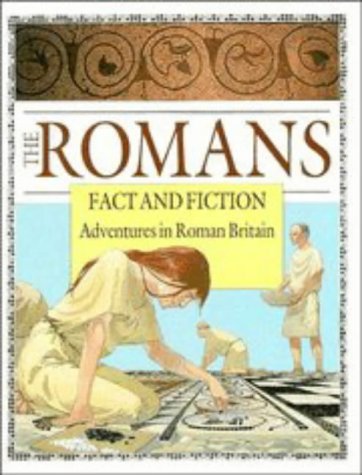
The Romans:Fact and Fiction-Adventures in Roman Britain by Robin Place
A very informational book. Part of the book is a story, which includes facts about Roman Britain, but the actually story is fiction. The other part of the book is straight forward facts, about how they lived back then, what tools they used etc. etc. It is a very small book so you won't feel pressured, and its any easy read, not hard and complicated. Very interesting and recommended for those wanting to learn about Roman Britain. 
Sunday, December 5, 2010
The Thieves of Ostia by Caroline Lawrence

4 children about the age of 11, find each other and become quick friends. They are soon of on a journey, because someone is going around chopping the heads off everyone's guard dog. This is causing lots of trouble in the city. The police is out on the look to, but they look harder anyway. They have a couple of suspisicons, about who did it. Meanwhile they find that there is a thief on the loose too stealing one of the friends money. Read the Book to find out more.
Pirates of Pompeii By Caroline Lawrence

This story is about 4 friends who live in a city right next to Pompeii. The town of Pompeii is covered in ash but for their town there is just ash in the sky, so they survuved the volcano explosion. When all 4 friends where offered a trip to leave there city and spend some time at the leader of Romes mansion, the agreed quickly. When they get there every one is happy because they have fresh air, and are happy. They soon find out that children are disapearing, actuaully not just disapearing but getting kidnapped. They are out on a journey to find out who is doing all of this kidnapping. Read the book to find out more about their adventure! It is in the library at ISP.
Friday, December 3, 2010
Hello!
This blog was created for me to post reviews on books, and information about the Roman Empire, so hopefully by tonight or tommorrow, things will be posted. :-)
Subscribe to:
Comments (Atom)